Wellness content can educate a reader completely and still lose the sale. A visitor lands on a product page, reads about the ingredients, understands the routine, feels ready to buy, and then has to navigate away to a separate store to actually complete the purchase. That gap between reading and buying is where most wellness brands lose revenue without realizing it.
Slenderiiz Dual Drops faced exactly this problem. They had a strong content page around their Slenderiix and Xceler8 supplement pair. The education was there. The product story was clear. What was missing was a direct buying path inside the same experience. That is where a smart solution came to their rescue. Let us find that out.
- Slenderiiz had strong wellness content but no direct buying path.
- EmbedUp added a shoppable product card inside the content page.
- Visitors can see the price, package, quantity, and Buy Now button in one place.
- The embedded card reduces extra steps between reading and checkout.
- Wellness brands can use EmbedUp to turn trusted content into sales.
Table of Contents
About Slenderiiz Dual Drops
Slenderiiz Dual Drops presents Slenderiix and Xceler8 as a two-part wellness product pair. The product is positioned around homeopathic appetite control, metabolism support, and hormone-free weight management.
Their website is built as a content-first experience. The page leads with the product story and education before presenting any buying option. That approach works well for wellness customers who need to understand and trust a product before they will purchase it.
The challenge was that the buying step still required the visitor to leave the content experience. The product education and the product purchase lived in different places. HubSpot’s 2026 marketing statistics page reports that 49% of marketers say content marketing helped generate sales or revenue, citing Content Marketing Institute 2025 research. That number only holds if the content and the buying moment are connected well.
The Challenges Slenderiiz Faced
Challenge 1: Customers Finished Reading but Could Not Buy in Place
The Slenderiiz content page was doing its job educating visitors about the supplement pair. But when a visitor finished reading and felt ready to act, the only option was a link that took them somewhere else entirely.
That redirect interrupted the buying momentum at the worst possible moment. A reader who has just invested time in understanding a wellness product is in a high-trust, high-intent state. Sending them away to a different page gives them time to hesitate, compare, or simply close the tab.
For a wellness product that requires trust before purchase, losing that momentum is expensive.
Challenge 2: Product Package and Pricing Were Not Clear at the Point of Decision
Before EmbedUp, visitors who wanted to buy had to navigate to a separate product page to understand exactly what they were ordering. Was it one bottle? Two? What was the price? Was there a discount?
These are not small questions for a wellness supplement. Customers want to know the package contents, the price they will pay, and the savings they receive before they decide to move forward. If that clarity is missing at the point of highest intent, the conversion window closes.
Slenderiiz needed a way to show the product name, sale price, comparison price, and package details directly on the content page, not on a separate product page that required an extra navigation step.
Challenge 3: No Direct Buying Action Inside the Content Experience
The page had strong content but no embedded purchase option. Visitors who were ready to buy had to take at least two extra steps before reaching checkout. Each extra step is a drop-off risk, and wellness customers tend to be more considered buyers than impulse buyers.
A product that requires trust to sell should have the shortest possible path from “I understand this” to “I bought this.” The longer the gap between those two moments, the more likely the visitor is to pause, second-guess, or look for a competitor.
How Slenderiiz Solved It with EmbedUp
Slenderiiz installed the EmbedUp app to tackle the challenges above. They added an EmbedUp product card directly on their content page. The component placed the buying experience inside the content without replacing it.
Solution 1: Shoppable Product Card Embedded in the Content Page
EmbedUp placed a clean two-column product card inside the Slenderiiz content page. On the left, the product image of both bottles side by side. On the right, the product name, current sale price, crossed-out comparison price, a quantity dropdown, and a Buy Now button.
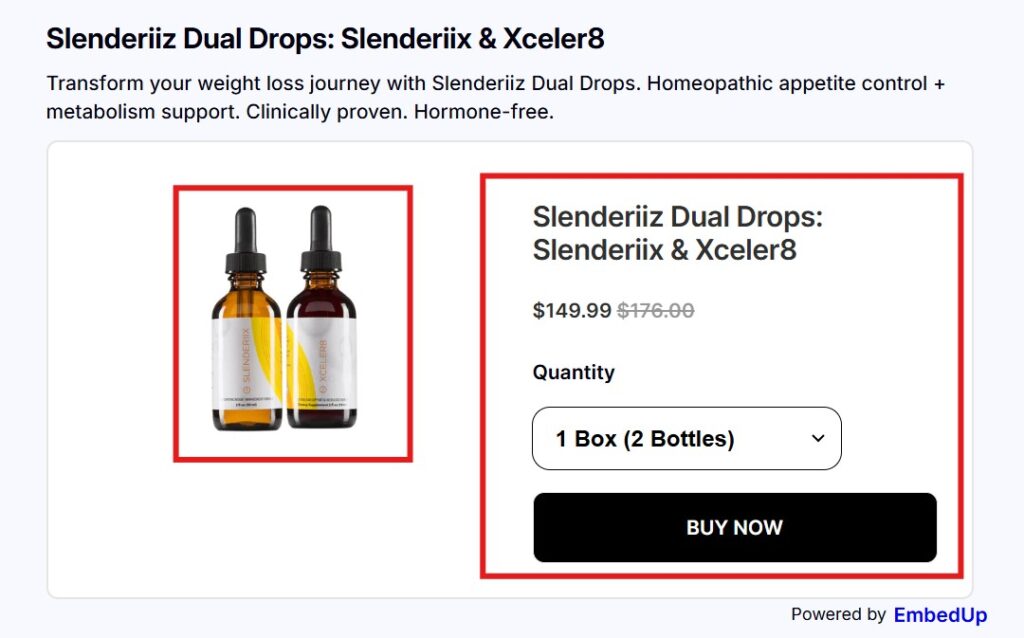
The card appears inside the content where the visitor already is. There is no redirect to a separate page. The shopper sees the product they just read about, understands exactly what they are getting, and can move forward from the same page.
This is the core value of the EmbedUp setup. The buying moment is now part of the content experience, not a separate destination.
Solution 2: Price and Package Clarity at the Point of Intent
The embedded product card shows the sale price of $149.99 alongside the crossed-out comparison price of $176.00. That comparison price is visible at the exact moment the shopper is deciding whether to buy. No extra navigation needed to understand the deal.
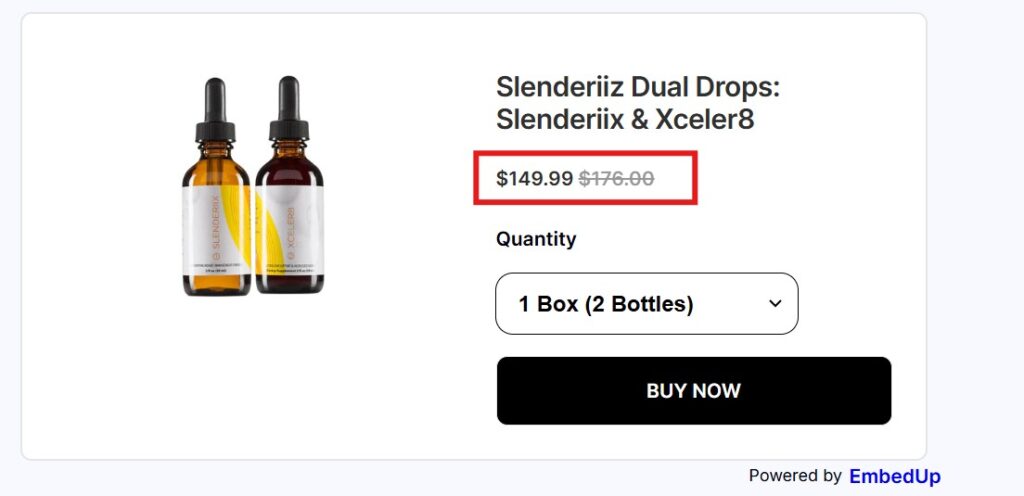
For a wellness supplement, price clarity at the point of decision matters. Customers buying a product like this want to know what they are paying and what they are saving before they click anything. The EmbedUp card delivers that information without requiring the visitor to go anywhere.
The crossed-out comparison price also supports the perceived value of the product. Customers see both what they pay and what they would have paid, which reinforces the decision to buy now rather than later.
Solution 3: Quantity Selector That Clarifies the Package
The quantity dropdown in the embedded card shows “1 Box (2 Bottles)” as the default selection. This is one of the most important details in the setup.
Wellness customers buying a supplement pair need to understand exactly what a single purchase includes. Is it one bottle or two? Is there an option to buy more? The quantity selector answers these questions directly in the buying component.
3 offers:
1 Box (2 Bottles)
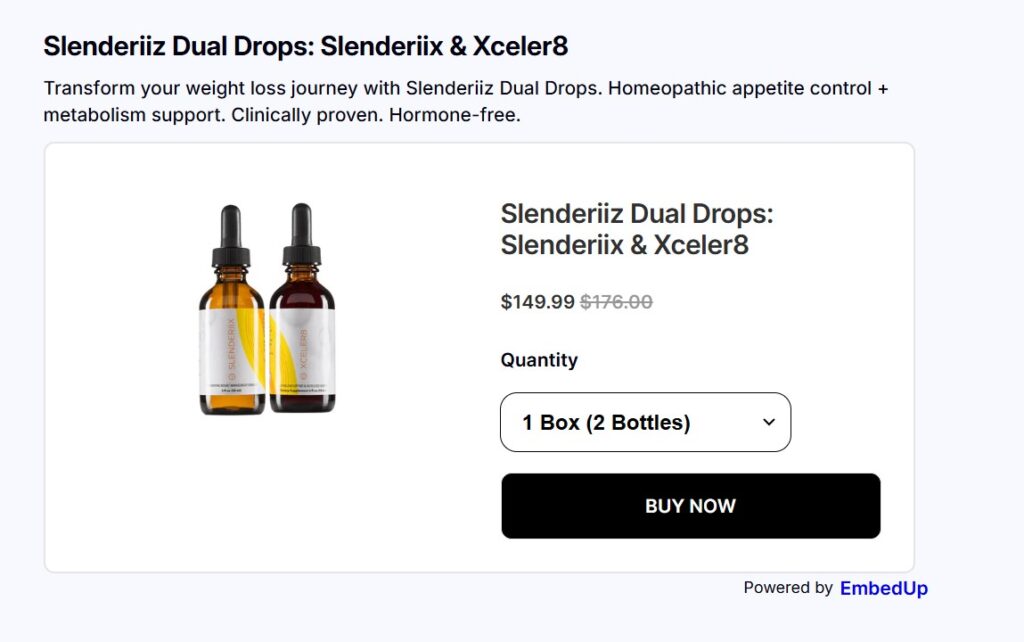
2 Boxes (4 Bottles)
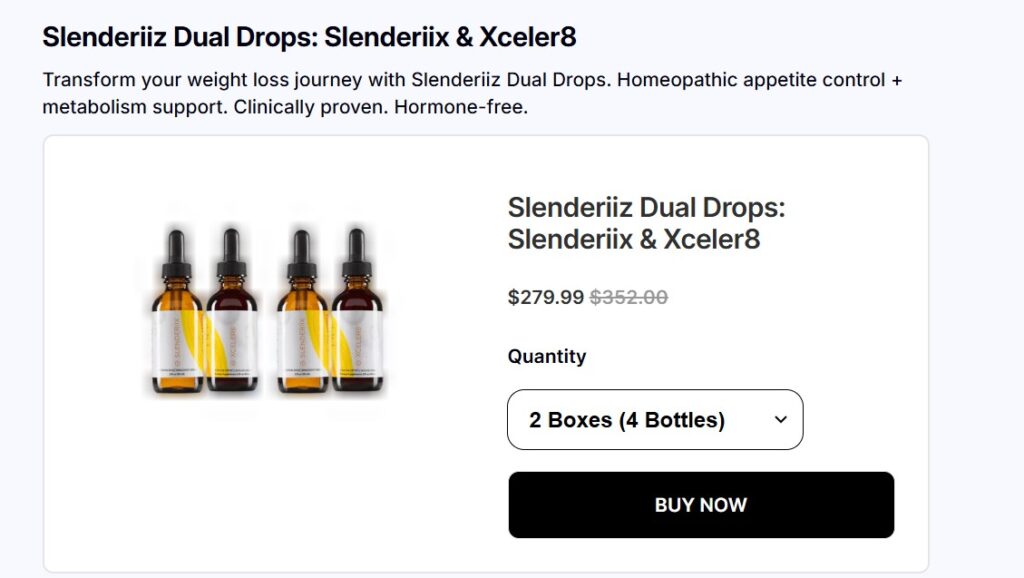
4 Boxes (8 Bottles)
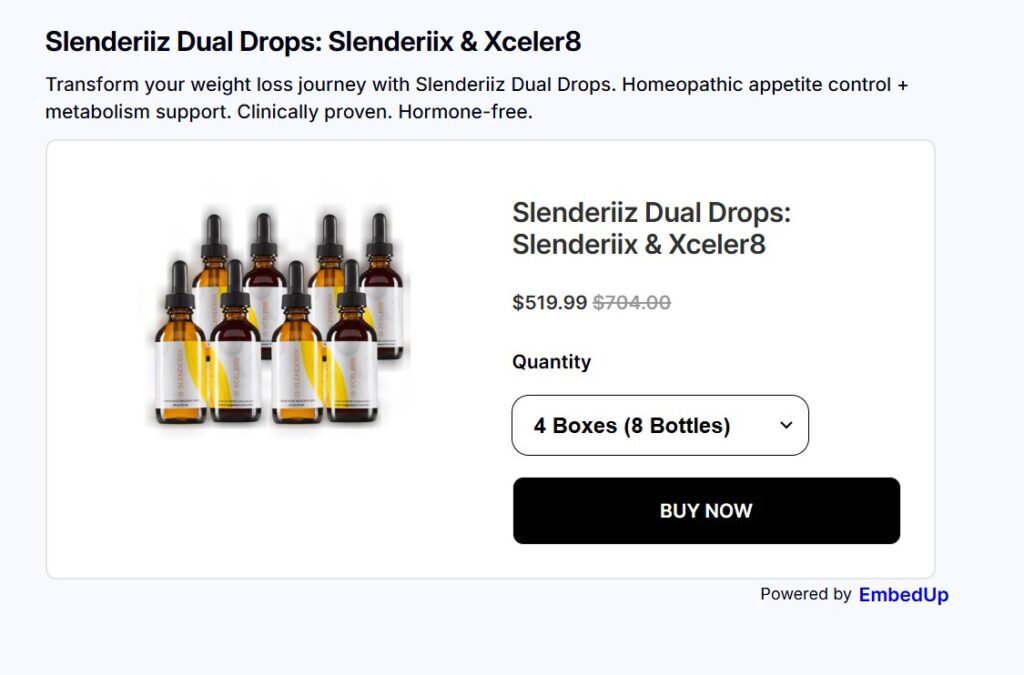
Before EmbedUp, that clarity required the visitor to navigate to the product page and read through the listing. Now it is visible inside the content card. Visitors understand the package before they click ‘Buy Now’, which reduces confusion and the chance of post-purchase disappointment.
The EmbedUp-powered card also displays the “Powered by EmbedUp” branding below the component, maintaining transparency about the buying technology being used.
What the EmbedUp Integration Looks Like
The embedded card sits cleanly on the Slenderiiz content page with a white background card, generous padding, and clear visual hierarchy. The product image takes the left column. The buying details take the right column. The Buy Now button is full-width and high-contrast.
The overall layout matches the content page’s aesthetic without looking like a banner advertisement. It feels like a natural part of the page rather than an interruption.
This matters for wellness brands specifically. A product card that looks like an ad can actually undermine the trust that the surrounding content worked to build. The EmbedUp setup avoids that problem by integrating the buying experience into the page visually and contextually.
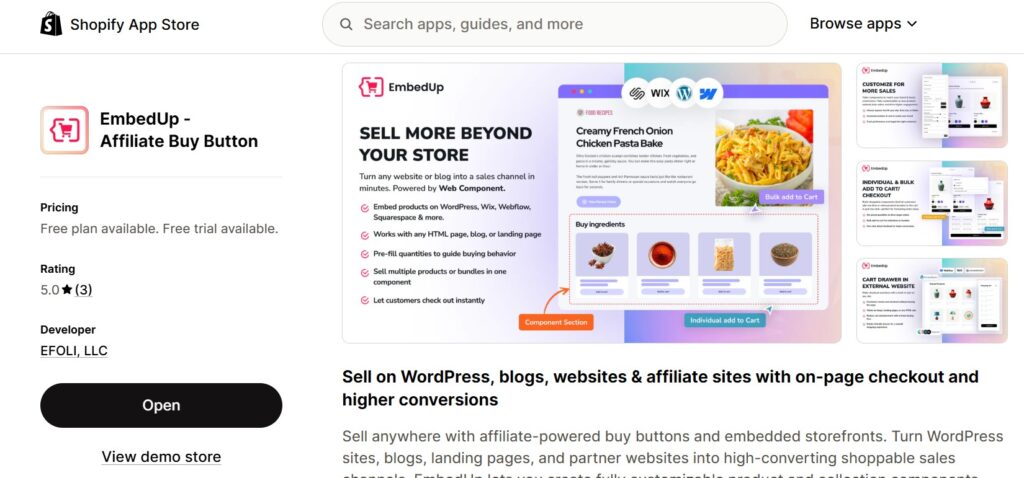
EmbedUp’s Shopify App Store listing positions the app around turning websites, blogs, affiliate pages, landing pages, and partner sites into sales channels by embedding products, bundles, and buy buttons directly in the content experience.
What Other Wellness Brands Can Take from This
The setup Slenderiiz used is not specific to their product. The structure works for any wellness brand that uses content to educate customers before selling.
A tea brand can embed a sampler box component after a brewing guide. A skincare brand can embed a routine kit after an ingredient breakdown page. A fitness brand can embed a gear bundle below a workout plan. A supplement brand can embed a subscription option after an ingredient breakdown.
The principle is consistent. Use the content to build trust and explain the product. Then place the buying component where the shopper’s intent is highest, which is usually right after the strongest educational or proof section.
Here is a practical setup approach for any wellness brand:
- Identify the content section where readers are most likely to feel ready to buy
- Create the EmbedUp product or collection component
- Place the component immediately after that high-intent section
- Show product image, sale price, comparison price, and package quantity clearly
- Use a direct, clear CTA button (Buy Now, Get Yours, Add to Cart)
- Add UTM tracking to measure performance from that specific page placement
- Track page visits, card clicks, quantity selector interactions, and completed orders separately
You can check out this guide on how to set up the app in a few steps.
The Slenderiiz setup shows that even a simple embedded product card can meaningfully close the gap between content and commerce. The page was already doing the hard work of building trust. EmbedUp gave the ready buyer a direct path to act on that trust without leaving.
FAQs
Is this a verified performance case study with revenue numbers?
This article documents the live page structure and the EmbedUp product card implementation visible on slenderiizdualdrops.com. Full revenue performance data is not included in this version. This is a use case spotlight based on the confirmed implementation.
What exactly does the EmbedUp card show on the Slenderiiz page?
The card shows the product name (Slenderiiz Dual Drops: Slenderiix and Xceler8), a sale price of $149.99, a comparison price of $176.00 crossed out, a quantity dropdown showing 1 Box (2 Bottles), a Buy Now button, and Powered by EmbedUp branding below the card.
Why does the quantity selector matter for supplement brands?
It tells shoppers exactly what a single purchase includes before they click anything. For supplement pairs or multi-bottle bundles, that clarity reduces confusion and post-purchase disappointment significantly.
Can other wellness brands use the same EmbedUp setup?
Yes. Any brand using content to educate customers before selling can place an EmbedUp product card at the point of highest buying intent. Tea, skincare, supplement, fitness, and nutrition brands all have this content-commerce pattern.
Is this the same experience as a standard Shopify product page?
No. The product component appears inside a content page. The shopper can see the product details and start checkout without navigating away from the content that built their interest and trust.
How does EmbedUp connect to Shopify inventory?
EmbedUp connects embedded components to live Shopify products and collections, including inventory levels and variant availability. Sold-out options update in the embedded card the same way they would on the product page.
What tracking does EmbedUp support for this type of setup?
EmbedUp supports UTM parameter tracking and attribution for embedded components. Merchants can track clicks, cart adds, and purchases from each specific embed location or partner page.
Conclusion
Slenderiiz Dual Drops used EmbedUp to close the gap between content and commerce. The implementation is clean, functional, and contextually placed: a product card with price, package clarity, and a direct buying action embedded inside the content experience rather than separated from it.
For the published version of this article, the framing stays as a use case spotlight until click, cart, and revenue data from the embedded component are available to support a full performance case study. That is the honest and accurate way to represent this implementation.
For wellness brands that rely on content to build trust before a sale, the Slenderiiz setup is a practical model worth studying. The content provides the education. EmbedUp handles the buying step. Both work better together than they would apart.