How to Make Money From a Makeup Blog With Shopify (2026 Guide)
 Anika Anamta Mehnaz16 min read
On this page
- Quick Answer: How Can You Make Money From a Makeup Blog Using Shopify?
- 5 Challenges Makeup Bloggers Face When Selling Shopify Products
- 1. You Can't Directly Sell Shopify Products on Your Makeup Blog
- 2. Redirecting Readers to External Stores Can Interrupt Their Shopping Experience
- 3. Featuring Multiple Makeup Products Makes Buying More Complicated
- 4. It's Difficult to Track Which Blog Recommendations Generate Sales
- 5. Product Recommendations Can Clash With Your Blog's Design
- How a Shopify Product Embedded App Fixes Everything
- 1. Display Shopify Makeup Products Directly Inside Blog Posts
- 2. Let Readers Shop Without Leaving Your Makeup Tutorial
- 3. Feature Complete Makeup Kits With Preset Product Bundles
- 4. Track Affiliate Sales and Commissions From Makeup Blog Content
- 5. Customize Product Cards to Match Your Beauty Blog
- How to Start Earning From Makeup Blogging With Shopify and EmbedUp
- Example: Turning an Everyday Makeup Tutorial Into Affiliate Income
- Tips to Make Your Makeup Blog More Profitable
- Make Your Makeup Content Work Beyond Product Recommendations
- FAQs
You spend hours testing foundations, comparing lipsticks, photographing products, and writing makeup tutorials that genuinely help your readers. Your audience trusts your recommendations, and some readers are ready to purchase the products you feature. But when it comes to making money from your makeup blog, things aren't always straightforward.
You might be recommending products sold by Shopify beauty brands, but your blog isn't a Shopify store. You can't simply add those products to your website and sell them as if they were your own. Sending readers to external stores through affiliate links is an option, but it also means giving up control over much of their buying experience.
The opportunity is worth exploring. According to the Performance Marketing Association's 2025 industry study, affiliate marketing spending in the United States reached $13.62 billion in 2024, generating approximately $113 billion in ecommerce sales. These figures show how significant affiliate-driven commerce has become, although they don't represent guaranteed earnings for individual bloggers.
For makeup bloggers, affiliate partnerships can provide an opportunity to earn commissions from products they already discuss. And for Shopify beauty merchants, those same partnerships can put their products in front of readers who are actively researching what to buy.
The challenge is connecting that content with an easy purchasing experience. Let's look at what usually gets in the way and how a Shopify product embed app can help.
Quick Answer: How Can You Make Money From a Makeup Blog Using Shopify?
You can earn money from a makeup blog by partnering with Shopify beauty brands, recommending their products, and receiving commissions on qualifying affiliate sales. With a Shopify product embed app, participating merchants can also place shoppable product cards and buy buttons directly inside your blog, allowing readers to explore and purchase recommended products without visiting a separate storefront.
To use this approach, you need an affiliate arrangement with a Shopify merchant. The merchant manages the products and the integration, while you create content that helps readers make informed purchasing decisions.
5 Challenges Makeup Bloggers Face When Selling Shopify Products
Writing useful beauty content is one part of running a makeup blog. Turning that content into income is another. Even when you have an engaged audience, technical limitations and disconnected shopping experiences can make monetization more difficult than expected.
Here are five common challenges.
1. You Can't Directly Sell Shopify Products on Your Makeup Blog
Suppose you've written a detailed review of a foundation from a Shopify beauty brand. You've explained its coverage, tested how it wears throughout the day, and included photographs showing the results.
A reader finishes your review and decides to purchase the foundation. Ideally, they should be able to find the product and begin shopping right there.
But if your blog runs on WordPress, Wix, or another website platform, Shopify products won't automatically appear as purchasable items on your pages. You would typically need an affiliate link, an embed integration, or another supported selling arrangement.
That leaves you with an awkward gap between recommending a product and helping someone buy it.
The challenge: Your blog can influence purchase decisions, but it doesn't automatically have the tools needed to display and sell products from a partner's Shopify store.
2. Redirecting Readers to External Stores Can Interrupt Their Shopping Experience
Imagine someone reading your article about the five best lipsticks for everyday wear. They like your first recommendation and click an affiliate link to visit the brand's Shopify store.
Now they're on an unfamiliar website. If they want to compare the second lipstick you mentioned, they need to return to your article, find the recommendation, and follow another link.
This back-and-forth can become frustrating, especially when your article features several products.
External links are useful and remain a perfectly valid way to earn affiliate commissions. However, sending readers between multiple pages introduces additional steps that may interrupt their buying journey.
The challenge: Readers must move between your blog and external storefronts instead of exploring products within the content that inspired their interest.
3. Featuring Multiple Makeup Products Makes Buying More Complicated
Makeup content rarely focuses on just one product. A complete tutorial might include primer, concealer, foundation, blush, eyeliner, and lipstick.
Readers often want to recreate the entire look, not purchase one item.
With a conventional affiliate setup, they may need to open several product links, find the correct shades, and add each product to their cart individually.
For bloggers, maintaining individual links and product recommendations also takes time, particularly when collaborating with multiple beauty brands.
The challenge: There's no convenient way to present an entire makeup routine as a coordinated shopping experience without using additional ecommerce tools.
4. It's Difficult to Track Which Blog Recommendations Generate Sales
A makeup review might receive hundreds of visits, but traffic alone doesn't tell you how much money the article has generated.
You need to know whether readers actually purchased the recommended products and which recommendations contributed to sales.
Without reliable affiliate tracking, you may struggle to answer questions such as:
Which makeup tutorial generated the most affiliate sales?
Did readers purchase the foundation or lipstick you recommended?
How much commission did you earn from a particular partnership?
Which products deserve more attention in future articles?
Tracking becomes especially important when you work with multiple Shopify merchants. Each partnership may have different reporting tools and commission arrangements.
The challenge: Without appropriate sales attribution and affiliate reporting, it's difficult to connect your content with actual earnings.
5. Product Recommendations Can Clash With Your Blog's Design
You've carefully chosen the colors, typography, and layout of your makeup blog. Your photographs follow a consistent style, and your product reviews are designed to be comfortable to read.
Then you introduce shopping elements that don't match the rest of your website.
Generic buttons, inconsistent product cards, or awkwardly positioned purchase links can make your article look cluttered.
This matters because beauty blogging is highly visual. Readers expect product photographs, descriptions, and recommendations to feel like natural parts of the content.
The challenge: You need shopping components that look appropriate on your website without requiring you to redesign your blog around them.
How a Shopify Product Embedded App Fixes Everything
The five challenges above have something in common: your beauty content and the products you're recommending exist in separate places.
A Shopify product embed app helps connect them.
Instead of treating your makeup blog as a place that only sends visitors elsewhere, Shopify merchants can make selected products available for purchase directly within your articles.
One app designed for this purpose is EmbedUp – Affiliate Buy Button.
EmbedUp lets Shopify merchants create embedded product and collection components for external websites, including WordPress, Wix, Webflow, and other supported pages. It also provides affiliate management and sales attribution features through its Pro plan.

Here's how its features address the challenges makeup bloggers and Shopify beauty brands commonly face.
1. Display Shopify Makeup Products Directly Inside Blog Posts
Returning to the foundation review example, you no longer need to rely exclusively on a text link directing readers to the brand's store.
With EmbedUp, the Shopify merchant can create an embeddable product component and provide the code for placement within your blog.
The embedded component can display the recommended product and give readers purchasing options directly from the article.
For example, your review could include a product card immediately after explaining why you recommend a particular foundation. Readers would have an opportunity to explore the product while the review is still fresh in their minds.
EmbedUp supports embedding Shopify products, variants, and collections on external websites, with individual product add-to-cart and checkout options.
How this helps: Your blog becomes more than a source of product recommendations. It can also provide a direct shopping opportunity for products supplied by your Shopify merchant partners.
2. Let Readers Shop Without Leaving Your Makeup Tutorial
One of EmbedUp's key capabilities is its on-page shopping experience.
When a merchant embeds a product component into your article, readers can interact with purchasing options without first navigating to the merchant's regular product page.
This can be particularly helpful for makeup tutorials that introduce products throughout the article.
For example, in a tutorial about creating a natural everyday look, you might introduce a moisturizer, foundation, blush, and lip tint at different stages. Each recommendation can sit close to the explanation that makes it useful.
Rather than interrupting the tutorial to browse separate storefront pages, readers can explore the available shopping options within the article.
The transaction remains connected to the Shopify merchant's commerce setup. You aren't taking ownership of the merchant's inventory or independently processing their orders.
How this helps: Readers can move from discovering a product to purchasing it with fewer unnecessary page transitions.
3. Feature Complete Makeup Kits With Preset Product Bundles
A complete makeup look often requires several complementary products, and this is where EmbedUp's preset bundle functionality becomes useful.
Suppose your article explains how to create a soft-glam makeup look using five products from the same Shopify beauty brand.
The merchant could prepare a preset bundle containing those products in fixed quantities and place the bundle component inside your tutorial.
Readers would then have an option to purchase the curated set rather than locating each product individually.
EmbedUp's Growth and Pro plans support preset bundles with fixed products and quantities, along with one-click options to add all included items to the cart or proceed toward checkout.
This feature can work particularly well for articles featuring starter makeup kits, skincare routines, seasonal beauty collections, and complete makeup looks.
It does have one important limitation: preset bundles are merchant-configured selections, not an unrestricted build-your-own makeup kit feature.
How this helps: Bloggers can present coordinated product recommendations, while participating Shopify merchants can make it easier for customers to purchase multiple complementary items.
4. Track Affiliate Sales and Commissions From Makeup Blog Content
Getting readers interested in a product is valuable, but affiliate income depends on qualifying purchases and the terms of your agreement with the merchant.
EmbedUp's Pro plan includes features for creating and managing affiliate partners, assigning embedded components to affiliates, tracking attributed orders, and reporting affiliate sales and commissions.
A Shopify beauty brand could use these capabilities to collaborate with several bloggers, giving each partner assigned shopping components and tracking their performance.
For bloggers, this creates a clearer connection between promotional content and the commissions recorded by the merchant.
For example, if a beauty brand collaborates with three bloggers promoting different makeup collections, the merchant can use affiliate performance and attribution reports to understand how those partnerships are performing.
It's important to distinguish commission tracking from guaranteed earnings. The merchant and blogger still need to agree on commission rates, qualifying purchases, payment terms, and any applicable refund or cancellation rules.
How this helps: Merchants gain visibility into affiliate performance, while bloggers can work within a more structured commission-tracking arrangement.
5. Customize Product Cards to Match Your Beauty Blog
Your blog's design shouldn't have to change just because you're adding Shopify products.
EmbedUp offers customizable embedded components, allowing merchants to adjust shopping elements for use on external websites.
The Starter plan supports basic buy button customization, while Growth and Pro offer advanced customization and custom CSS.
This is useful when creating product displays that need to sit comfortably alongside makeup photography, tutorials, or product comparison sections.
For instance, a beauty blogger using a minimalist website design may prefer understated product cards, while a colorful editorial-style blog might benefit from more prominent shopping elements.
The available customization helps the merchant adapt the embedded components rather than forcing every partner website to use the same presentation.
How this helps: Shopping elements can complement the article's existing visual design, helping product recommendations feel like part of the content instead of unrelated advertisements.
How to Start Earning From Makeup Blogging With Shopify and EmbedUp
If you're interested in monetizing your beauty blog through Shopify affiliate partnerships, you don't necessarily need to create your own Shopify store.
The practical approach is to collaborate with a Shopify beauty merchant who wants to promote products through your content.
Here's how that partnership could work.
Step 1: Find a Shopify beauty brand to partner with
Look for merchants whose products genuinely fit your audience. A blog focused on affordable everyday makeup, for example, would benefit from partnerships with brands selling products relevant to that audience. Discuss commission rates, payment terms, and expectations before promoting anything.
Step 2: Ask the merchant to set up EmbedUp
The Shopify merchant installs EmbedUp, creates product or collection components, and configures the affiliate partnership using the Pro plan. They can then assign suitable components to your partnership.
Step 3: Add the provided product embeds to your blog
Once the merchant provides the embed code, place it in a supported HTML or custom-code area of your website. The exact steps depend on your blogging platform and its embedding permissions. Test the display and purchase experience before publishing.
Step 4: Publish useful makeup content
Write tutorials, product comparisons, reviews, and beauty guides that answer genuine reader questions. Place relevant shopping components near the corresponding recommendations and disclose your affiliate relationship clearly.
Step 5: Review sales and refine your content
Work with your merchant partner to understand which products generate attributed sales. Use that information alongside reader feedback and search performance to decide which beauty topics deserve more attention.
Example: Turning an Everyday Makeup Tutorial Into Affiliate Income
Let's imagine you run a makeup blog for beginners. One of your most popular articles explains how to create a natural makeup look in ten minutes.
You recommend four products from a participating Shopify beauty brand:
Product | Price |
Lightweight foundation | $24 |
Cream blush | $18 |
Mascara | $15 |
Tinted lip balm | $12 |
Total | $69 |
Illustrative products and prices, not actual EmbedUp merchant listings.
With the merchant's help, you could feature these products inside your tutorial using EmbedUp components. If the merchant creates a preset bundle, readers could also have the option to purchase the complete set.
Now suppose the merchant agrees to pay a 10% commission on qualifying sales.
If a reader purchases the entire $69 set and the full amount qualifies for commission, your illustrative earnings would be $6.90.
That isn't a prediction of what you'll earn. Actual commissions depend on the agreement, attribution rules, eligible order value, and whether purchases are completed and remain eligible.
The point is that a single useful tutorial can become part of an ongoing affiliate strategy. It can continue introducing relevant products to new readers without requiring you to create a separate ecommerce store.
Tips to Make Your Makeup Blog More Profitable
Adding embedded shopping options can improve the way readers discover and purchase products, but earning affiliate income still depends on the quality of your content and the trust you've established.
Here are five practical ways to strengthen your approach.
- Write about problems your readers already have. Tutorials addressing oily skin, foundation matching, beginner makeup routines, or long-lasting lipstick can attract readers with specific product questions. Answer those questions before introducing recommendations.
- Recommend products you can genuinely evaluate. Explain what you tested, how the product performed, and who might benefit from using it. Readers should understand the reasons behind your recommendations, not just see a purchase button.
- Place shopping components where they're useful. A foundation product card belongs near your foundation review, not in the middle of an unrelated skincare explanation. Context matters more than the number of embedded products.
- Keep product information accurate. Coordinate with the merchant when recommended products, shades, collections, or availability change. EmbedUp connects components with Shopify product data, but your written descriptions and reviews still need attention.
- Disclose affiliate relationships clearly. If you earn commissions from qualifying purchases, make that relationship visible to readers. The Federal Trade Commission's Endorsement Guides explain that disclosures should be clear and conspicuous, preferably close to relevant recommendations. Follow the disclosure requirements applicable to your audience and location.
For example, you could write near your product recommendations:
This article contains affiliate product recommendations. I may earn a commission if you purchase through the shopping links or product buttons featured here, at no additional cost to you.
Only use this wording when it accurately describes your affiliate arrangement.
Make Your Makeup Content Work Beyond Product Recommendations
A successful makeup blog is built on useful advice, relatable experiences, and recommendations readers can trust. If you've already put that effort into your content, affiliate partnerships can give you an opportunity to earn from the products you introduce.
You don't need to stock makeup products, build your own Shopify store, or turn every article into a sales pitch.
What you need is a reliable connection between your content and the beauty brands you recommend.
For bloggers working with Shopify merchants, EmbedUp can help create that connection through embedded products, convenient purchase options, curated product sets, and affiliate performance tracking.
For Shopify beauty brands, it offers a way to make products available through relevant blogs and partner websites, where customers may already be researching their next purchase.
Whether you're a beauty blogger exploring affiliate income or a Shopify merchant looking for new ways to sell through content, EmbedUp helps bring product discovery and purchasing closer together.
Explore EmbedUp or install it from the Shopify App Store to see how your products can become part of a more connected shopping experience.
FAQs
Can you make money from a makeup blog without selling your own products?
Do I need a Shopify store to earn affiliate commissions from beauty products?
Can I embed Shopify makeup products into WordPress?
How does a Shopify product embed app differ from a regular affiliate link?
Can I earn commissions on makeup products sold through EmbedUp?
Is EmbedUp free to use?
- Embed products blogs
- shopify embed products
- makeup blogs
Related articles
 Embed Shopify Products
How to Make a Shoppable Holiday Gift Guide Readers Can Buy From
Last checked: 2 November 2026, against the EmbedUp App Store listing, embedup.com, ShipStation's 2026 holiday shipping deadlines, and the NRF 2026 holiday forecast. Who this is for: Shopify merchants, bloggers, and content teams who publish a holiday gift guide on a blog or website. Reading time: about 16 minutes.
17 min read
 Embed Shopify Products
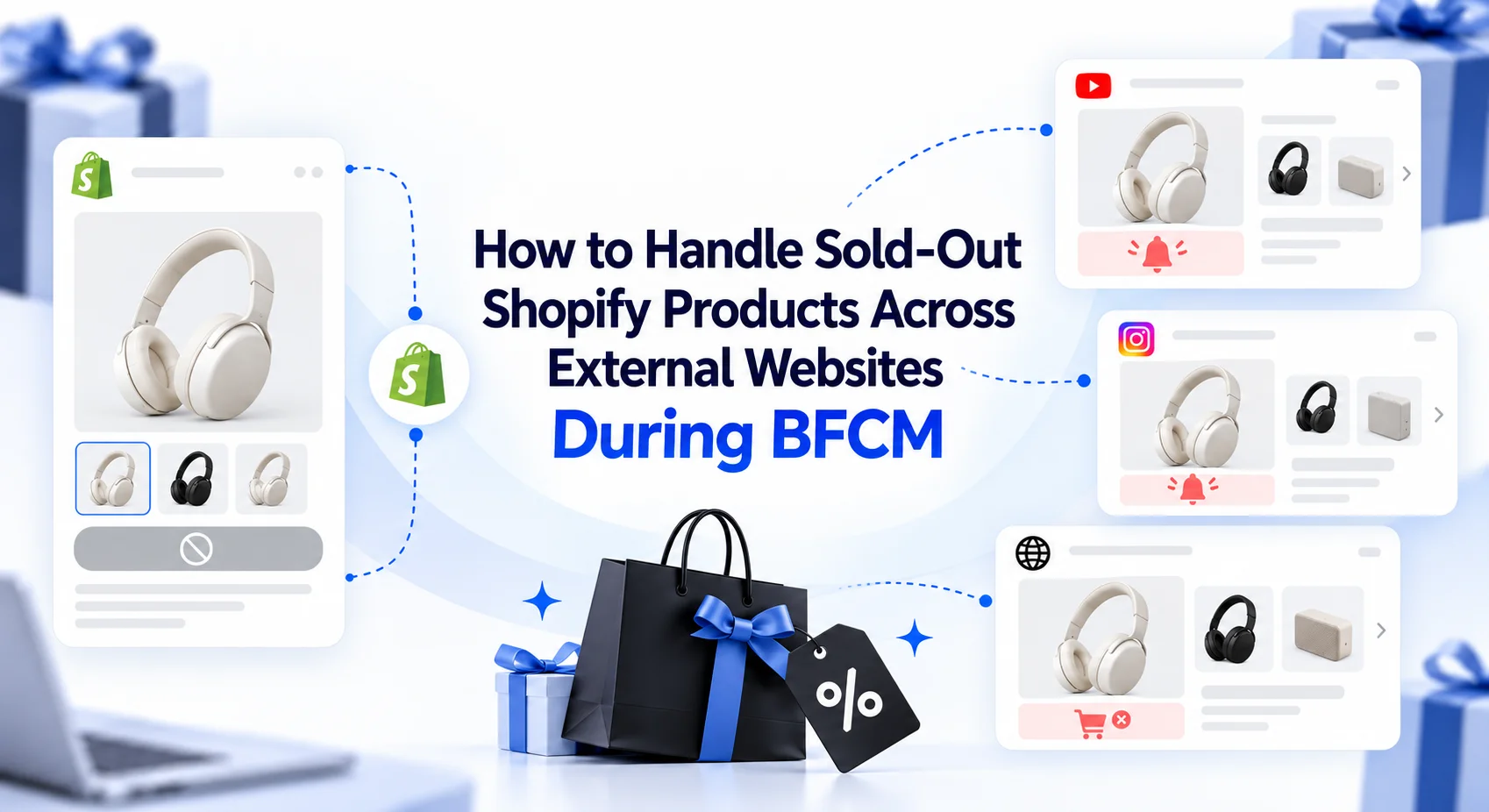
How to Handle Sold-Out Shopify Products Across External Websites During BFCM
When popular Shopify products sell out during BFCM, merchants need to respond across every external website promoting them. This guide explains how to handle unavailable variants, update embedded product placements, choose suitable alternatives, use collection embeds, and keep external campaigns useful as product availability changes.
18 min read
 Embed Shopify Products
Food Bloggers: How to Sell Recipe Ingredients Online Without Losing Your Readers
This guide shows food bloggers and Shopify brands how to sell recipe ingredients directly from their content using shoppable product cards, ingredient bundles, live Shopify data, and affiliate tracking. It explains how EmbedUp can connect recipe pages with Shopify products, reduce unnecessary buying steps, and turn useful food content into a measurable sales channel without requiring custom development.
12 min read