What Are Shoppable Blog Posts? What Actually Makes One "Shoppable"?
 Syeda Rehnoma Tanzom8 min read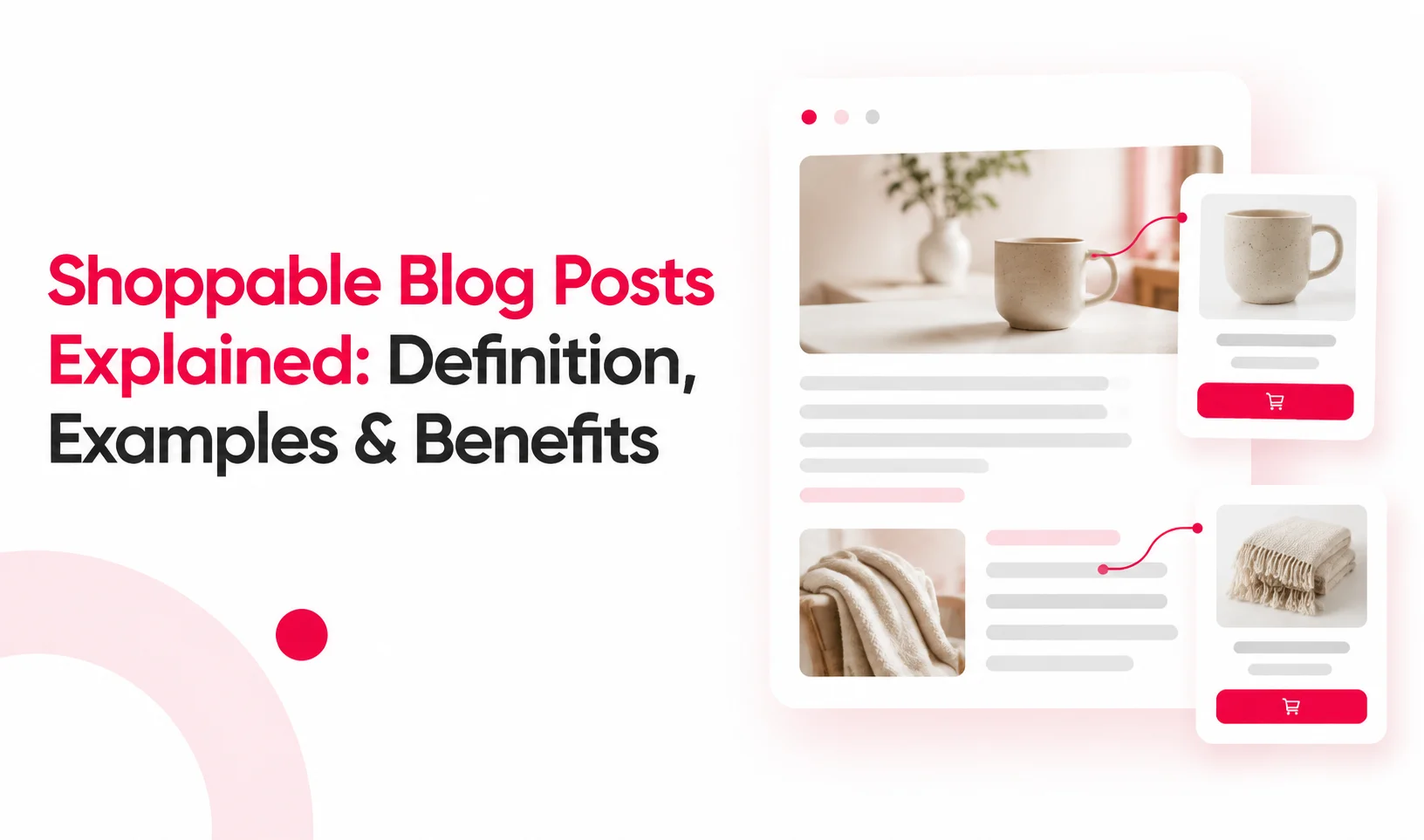
On this page
- What Is a Shoppable Blog Post?
- What Makes a Blog Post Actually Shoppable?
- Shoppable Blog Posts vs. Shoppable Social Posts
- Examples of Shoppable Blog Posts
- Buying Guide
- Tutorial Content
- Recipe Content
- How Shopify Merchants Can Turn a Post Into One
- When a Blog Post Doesn’t Need to Be Shoppable
- Frequently Asked Questions
- Conclusion
A merchant may come across the term shoppable blog posts while exploring content commerce, Shopify growth strategies, or ways to connect content with products. But the meaning is often unclear. Does it mean a blog post with a few product links? A tagged image like an Instagram shopping post? Or something more connected to the buying experience?
A shoppable blog post is a written article where products are naturally connected to the content, allowing readers to discover, view, and purchase relevant items without breaking their reading experience. The difference is that the products are part of the content journey, not simply added as links at the end of a page.
Understanding this difference helps merchants and publishers decide whether their existing content is already close to being shoppable or whether they are creating something that does not match their audience’s intent.
Short Answer: A shoppable blog post is a blog article that connects relevant products with the content itself, allowing readers to discover product details and take shopping actions while they are still engaged with the article. Unlike a normal blog post that simply adds product links, a shoppable post makes products a natural part of the reading experience through contextual placement, updated product information, and easier access to purchase.
TL;DR
Shoppable blog posts connect content and commerce by placing relevant products inside articles instead of separating shopping from reading.
A product link alone does not make a blog post shoppable. The product should appear where it helps the reader and supports the topic being discussed.
The best shoppable content uses live product information, such as current images, pricing, and availability, instead of static screenshots or outdated details.
Shoppable blog posts are different from social media shoppable posts. They live on owned content platforms and continue helping readers discover products over time.
Buying guides, tutorials, recipes, and recommendation articles often work well because readers already have an interest in the products being discussed.
What Is a Shoppable Blog Post?
A shoppable blog post is a blog article that includes contextual product experiences directly inside the content, allowing readers to explore or buy products while they are engaging with the article.
A normal blog post may mention a product and add a link that sends readers to a separate product page. A shoppable blog post connects the product with the exact moment when the reader has interest or buying intent.
For example, a skincare brand may publish an article about building a nighttime skincare routine. A traditional article might mention three products and link to them at the bottom. A shoppable version could display those products next to the relevant steps, allowing readers to see product details and continue shopping without leaving the article.
The key difference is context. A product link points somewhere else. A shoppable experience connects the product with the reason the reader is interested in it.
What Makes a Blog Post Actually Shoppable?
Not every article with a product mention qualifies as shoppable blog content. A shoppable post has several elements that connect the content experience with the product journey.
A blog post is closer to being shoppable when it includes:
Products placed where they naturally support the content: The product appears at the point where the reader needs it. A recipe can show ingredients while explaining the cooking process. A buying guide can display recommended products beside each recommendation.
Live product information instead of static descriptions: Product details should reflect the actual store information, such as current availability, pricing, images, or variants. A screenshot or outdated product image does not create the same experience.
A way to explore products without disrupting the article: Readers should not have to leave the content immediately after becoming interested. Product cards, embedded displays, or similar experiences help keep the buying journey connected to the article.
A clear connection between content and purchase intent: The products should solve the problem discussed in the article. Random product placements can make a blog feel like an advertisement rather than useful content.
Trackable product interactions: Merchants need visibility into how readers interact with products inside content. This helps understand which articles and placements contribute to product discovery.
These elements are part of the broader approach behind shoppable content commerce, where content and commerce work together instead of existing as separate experiences.
Shoppable Blog Posts vs. Shoppable Social Posts
One reason the term is confusing is that most search results for “shoppable posts” focus on social media platforms.
A shoppable social post usually refers to content on platforms such as Instagram, TikTok, Pinterest, or Facebook where products are tagged directly inside posts. These experiences are built around platform-specific features and depend on how those networks display and distribute content.
A shoppable blog post works differently. It lives on content that a merchant or publisher owns, such as a website blog or external content platform. Because the content remains available over time, it can continue attracting visitors through search, sharing, and other channels long after a social media post disappears from a feed.
Both formats connect products with content, but they serve different purposes. Social shopping focuses on discovery inside a platform, while shoppable blog content connects educational or helpful content with a purchasing journey.
Examples of Shoppable Blog Posts
The easiest way to understand shoppable blog posts is to compare a regular article with a commerce-connected version.
Buying Guide
Traditional version:
A furniture store publishes “How to Choose the Right Office Chair” and lists several recommendations with text links.
Shoppable version:
The article introduces different chair types, then displays recommended chairs directly within each section. Readers can view product details while learning why each option fits a specific need.
Tutorial Content
Traditional version:
A makeup brand publishes “How to Create a Natural Makeup Look” and mentions the products used.
Shoppable version:
Each tutorial step highlights the specific products needed for that part of the routine, making it easier for readers to recreate the look.
Recipe Content
Traditional version:
A food brand shares a recipe and lists ingredients separately.
Shoppable version:
The recipe connects ingredients or kitchen products with the relevant steps, allowing readers to explore items while following the instructions.
These examples work because the products are not added randomly. They appear because the reader already has a reason to consider them.
How Shopify Merchants Can Turn a Post Into One
For Shopify merchants, making a blog post shoppable usually means replacing static product mentions with connected product experiences. Instead of manually adding product images, descriptions, or links that can become outdated, merchants can use product embeds that stay connected with their store data.
This approach is especially useful for merchants who publish content outside their main storefront, such as blogs built with WordPress, Wix, Squarespace, or other platforms. Tools like EmbedUp can help merchants bring Shopify products into external content experiences while keeping product discovery closer to the article.
A merchant publishing a product-focused blog does not necessarily need to redesign the entire article. The goal is to identify where readers already show interest in a product and make that part of the content easier to act on.
For merchants who want to understand the business side of content-driven selling, how to monetize a blog with products involves looking beyond simple affiliate links and focusing on how content can support product discovery and sales.
When a Blog Post Doesn’t Need to Be Shoppable
Not every blog post should become a shopping experience.
Some content exists mainly to educate, tell a brand story, share company updates, or build trust. For example, a founder’s story, industry opinion piece, or educational article without product-related intent may not benefit from product placements.
Adding products where they do not naturally belong can make the content feel less helpful. A shoppable format works best when the reader already has a reason to explore a product.
The goal is not to add shopping elements to every article. It is to recognize when content and commerce naturally support each other.
Frequently Asked Questions
Is a shoppable blog post the same as a shoppable social media post?
Do I need a Shopify store to make a blog post shoppable?
What blog formats work best for shoppable content?
Is a product link enough, or does a blog post need embedded checkout?
Conclusion
Shoppable blog posts are not simply articles that contain product links. They connect useful content with relevant products at the moment readers are most interested. The best way to identify one is to check whether the products feel like a natural part of the article rather than an extra sales element added afterward. By understanding this difference, merchants can evaluate existing content and find opportunities where content and commerce genuinely support each other.
- shoppable blog posts
- shoppable blog posts shopify
- shoppable blog content
- what makes a blog post shoppable
- shoppable blog post examples
Related articles
 Content Commerce
How to Create a Shoppable Blog Post That Doesn't Feel Forced
Learn how to create a shoppable blog post by planning product moments before you start writing. This guide covers structure, product placement, Shopify connections, and the checks to make before publishing.
12 min read
 Embed Shopify Products
Food Bloggers: How to Sell Recipe Ingredients Online Without Losing Your Readers
This guide shows food bloggers and Shopify brands how to sell recipe ingredients directly from their content using shoppable product cards, ingredient bundles, live Shopify data, and affiliate tracking. It explains how EmbedUp can connect recipe pages with Shopify products, reduce unnecessary buying steps, and turn useful food content into a measurable sales channel without requiring custom development.
12 min read
 Content Commerce
Shoppable Content Commerce: How Brands Turn Content Into Sales
Shoppable content commerce connects useful blogs, guides, and recipes with relevant products at the moment readers are ready to act. It helps Shopify merchants turn existing content into measurable sales opportunities without disrupting the reading experience.
15 min read